
Wildlife Conservation Projects in India primarily focus on protecting and conserving threatened and endangered species in their natural habitat through targeted strategies and initiatives.
These projects play a key role in maintaining biodiversity, restoring ecosystems, and ensuring the survival of India’s unique biodiversity.
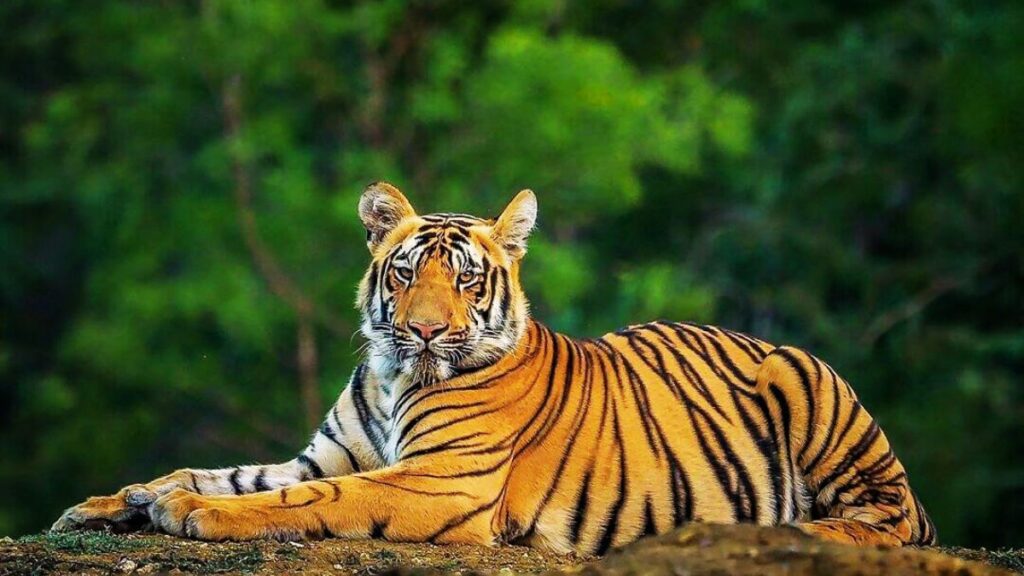
Nowadays, wildlife conservation has become necessary due to the negative impact of anthropogenic activities on wildlife and their natural habitats.
Important Wildlife Conservation Projects In India:
Since Independence, the Government of India, International Organisations, and other Non-Governmental Organisations have launched several programs to safeguard wildlife populations.
Project Red Panda, 1966:
Red Panda can only be found in the Eastern Himalayan region of India, especially parts of Sikkim, Darjeeling, Assam, and Arunachal Pradesh, at a height between 1500 m and 4000 m.
In Arunachal Pradesh, Red Pandas are known as Cat Bear. The project started in 1966 at Padmaja Naidu Himalayan Wild Life Park with the aid of WWF.
Project Hangul, 1970:
Hangul deer is a species of the famous European Reindeer. Hangul is extinct throughout the world, and a small portion of them are left in Dachigram National Park, Kashmir.
Hangul is listed as a Critically Endangered species in the IUCN Red Data Book. To preserve the dwindling population, the Project Hangul was launched in the 1970s.
Project Gir, 1972:
Project Gir was started in 1972 by the Government of India to protect the Asiatic Lions. The Saurashtra peninsula in Gujarat is the only home of the Asiatic Lions.
Project Tiger, 1973:
Project Tiger was started in 1973-74 and is one of the most successful wildlife protection ventures launched by the Government of India.
The aim of the project was to conserve the tiger in specially constituted tiger reserves. The project is successful in maintaining a significant amount of the tiger population in their natural environment.
The first-ever all-India Tiger Census was conducted in 1972, and it was recorded that 1827 tigers existed all over India.
In 1969, the IUCN General Assembly meeting was held in New Delhi, where concerns related to the threats to wildlife were discussed.
As a result, tiger poaching was banned, and the Wildlife Protection Act, 1972, came into force.
Project Olive Ridley Turtles, 1975:
The decreased population of Olive Ridley Turtles forced the Government of India to launch the project back in 1975.
The project was launched at Bhitarkanika, Cuttack, Orissa. Bhitarkanika was the second-largest mangrove forest in India. Later, the project was extended to Rushikulya and the mouth of the river Devi.
Project Crocodile, 1975:
For a long time, crocodiles were hunted for commercial purposes, and habitat loss resulted in a dwindling of their population.
In such a scenario, the conservation of crocodiles was initiated with the establishment of Project Crocodile in 1975.
There are mainly three species of crocodiles in India:
- Estuarine crocodiles
- Freshwater swamp crocodiles
- Gharial.
A total of 16 crocodile rearing centres have been developed in the country under this project (1975-78) along with eleven sanctuaries.
The maximum number of sanctuaries was present in Andhra Pradesh, 5 by the year 1981 and more than 1000 crocodiles were raised.
Crocodile Breeding Scheme, 1975:
With Project Crocodile, the Government of India has also launched the Crocodile Breeding Scheme in 1975 with a sole focus to enhance the crocodile population at a rapid pace with the help of the United Nations Development Program (UNDP).
Tikarpada in Orissa was selected to launch the project. However, later it was extended to Rajasthan, Madhya Pradesh, Kukail in Uttar Pradesh, Maharashtra, Andaman & Nicobar, Assam, Bihar, and Nagaland.
Project Manipur Thamin, 1977:
Thamin is a species of deer that is endemic to the South-East part of the Loktak lake in Manipur. It is considered one of the rarest mammal species in the world.
Thamin’s population decreased so rapidly that in 1977, only 18 Thamin deer were left in the wild. To protect these deer and enhance their population, Project Thamin was launched in 1977 in Manipur.
Project Rhino, 1987:
The one-horned rhino is only endemic to Kaziranga National Park, Assam. The population of rhinos is highly threatened by illegal poaching for horns, which are greatly valued as aphrodisiacs on the grey market.
Project Rhino was first initiated in Kaziranga National Park back in 1987. Later, it was extended to Manas National Park (Assam) and Jaldapara (West Bengal).
Project Elephant, 1992:
The Central Government launched Project Elephant in 1992 to assist the states financially and technically to manage the population of wild Asian elephants.
The project aims to ensure the long-term survival of elephants in their natural habitats by establishing elephant corridors.
Other important aims of the project are to research and evaluate the ecology and management of elephants, create awareness among people, and provide veterinary care for the captive elephants.
The project also addresses the long-standing issue of human-animal conflict and the welfare of domesticated elephants.
Project Elephant has also established the MIKE (Monitoring of Illegal Killing of Elephants) program of CITES. This program aims to uncover a significant increase in the poaching of bull tuskers, which has damaged the population dynamics by disturbing the sex ratio.
Project Vulture, 2006:
The Government of India has launched Project Vulture to address the decline in the population of vultures, which includes banning diclofenac in the veterinary sector.
Project Snow Leopard, 2006:
Project Snow Leopard was launched in 2006 on the lines of Project Tiger, Elephant, and Rhino by the Ministry of Environment and Forests in 2006
The project aimed to protect the highly endangered Snow Leopards in their natural habitat. There are 400-700 Snow Leopards across five states, such as Jammu and Kashmir, Himachal Pradesh, Uttarakhand, Sikkim, and Arunachal Pradesh.
Also Read: Indian Legislation & Rules Related To The Protection Of Biodiversity
Also Read: Distribution of Soil In India For SSC, Railway, & Other Examinations

Hi, I am Lakshya Sen.. I have been teaching for SSC, Railways, and Other Examinations For 5+ years. To date, more than 1000 students have fulfilled their dreams with the help of my guidance.