
Biological diversity is the term that denotes the variety of lives that exist on the earth. It is the variety of all species, including plants, animals, and micro-organisms, and the ecosystem within which they exist and interact.
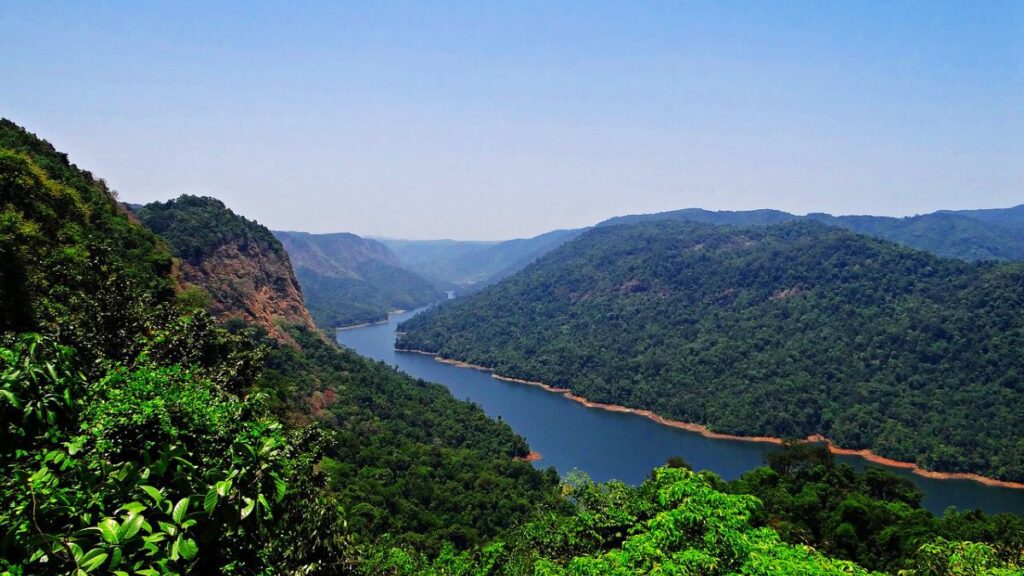
However, with the advent of human beings, the universe has seen a significant decline in biodiversity and has also experienced a loss of genetic diversity.
Biodiversity:
Biodiversity generally means the variety of organisms within the living world. The term emphasises the number, variety, and variability of living organisms.
There are three types of biodiversity that usually exist: Genetic diversity, species diversity, and ecosystem diversity.
Biodiversity generally tends to cluster in hotspots and increase with time. But unfortunately, due to some anthropogenic factors, such as pollution, global warming, and deforestation, the growth of biodiversity has slowed down.
Around the world, we can notice different patterns of biodiversity. Terrestrial biodiversity is maximum near the equator due to warm climate, heavy rainfall, and high primary productivity.
However, the marine diversity is highest along coasts in the Western Pacific, where sea surface temperature is highest, and in the mid-latitudinal band in all oceans.
Biodiversity Mapping:
The first attempt at biodiversity mapping was created by Brits, P. Williams, Decair Right, and Chris Hump Reger. The group of scientists built a software, ‘World Map’, to map biodiversity around the world.
The scientists considered three types of diversity while mapping the biodiversity: Alpha (total number of species found in a specific region), Beta (structural diversity found in species in a particular region), and Gamma diversity (rate of change of species with the expanding geographical region).
Important Biodiversity Hotspots in India:
A biodiversity hotspot is a biogeographic region that is a reservoir of biodiversity, which faces a significant amount of threats from humans. The concept of biodiversity hotspots originated with Norman Myers.
If any region wants to be qualified as a biodiversity hotspot, the site must meet two strict criteria according to Myers’ 2000 edition of the hotspot map.
The site must contain at least 0.5% or 1500 species of vascular plants as endemics, and it must have lost more than 70% of its primary vegetation.
There are three most important biodiversity hotspots in India as follows:
Eastern Himalaya Biodiversity Hotspots:
The eastern-Himalayan region forms a distinct floral biodiversity site, comprising Nepal, Bhutan, South-east China, and parts of North-Eastern India.
In the Indian portion, more than 5800 plant species are found. Among them, more than 2000 species (36%) are endemic to the region.
At least 55 flowering plants endemic to the region are recognised as rare, precious, and most wanted, including the pitcher plant.
This region is also rich in avian diversity. More than 60% bird species found in India are recorded in the North-East. Apart from birds, the region is home to various lizards and turtles.
Out of 240 Indian amphibian species, 68 species are endemic to the North-East, and 20 of them are only endemic to Namdapha National Park.
Rare species of mammals, beetles, fish, and flies are also found in the biodiversity region.
Western Ghat Biodiversity Region:
The Western Ghat region, which spreads in 6 states of India, is one of the most important and richest biogeographical zones in India.
Due to varied topography and micro-climatic regimes, some areas within this region are considered to be the active zones of speciation.
As many as 315 species of vertebrates belonging to 22 genera are endemic to this region. Most of them are reptiles; however, mammals, birds, and fish are also found here.
This biodiversity site is super rich in amphibian, fish, and reptile varieties. This area is the home of 117 amphibian species, 76% of which are endemic to the region.
Many endemic species found in the Western Ghats biodiversity site are threatened. The Government of India constituted the Gadgil and Kasturivangar committee for the protection and conservation of the region.
Indo-Burma Biodiversity Hotspot:
The Indo-Burma biodiversity hotspot is one of the largest biodiversity hotspots around the world, spread over 2 million square km of tropical Asia.
It spreads out from Eastern Bangladesh, North East India, to Myanmar, Laos, Vietnam, and Thailand. The Andaman and Nicobar Islands also come under this biogeographic region.
Due to its huge area, the area encompasses 33 terrestrial ecoregions, which include tropical and sub-tropical moist broadleaf forests, dry broadleaf, and coniferous forests, and mangroves.
Also Read: Jainism (With Practice MCQs) For SSC, Railway, & Other Competitive Examinations
Also Read: Indian Legislation & Rules Related To The Protection Of Biodiversity

Hi, I am Lakshya Sen.. I have been teaching for SSC, Railways, and Other Examinations For 5+ years. To date, more than 1000 students have fulfilled their dreams with the help of my guidance.