
India is a primarily agricultural country, and the success of agriculture entirely depends on the fertility of the soil.
Indian soils have been used for agriculture for thousands of years (dating back to the Indus Valley Civilisation) and have lost a significant portion of their fertility.
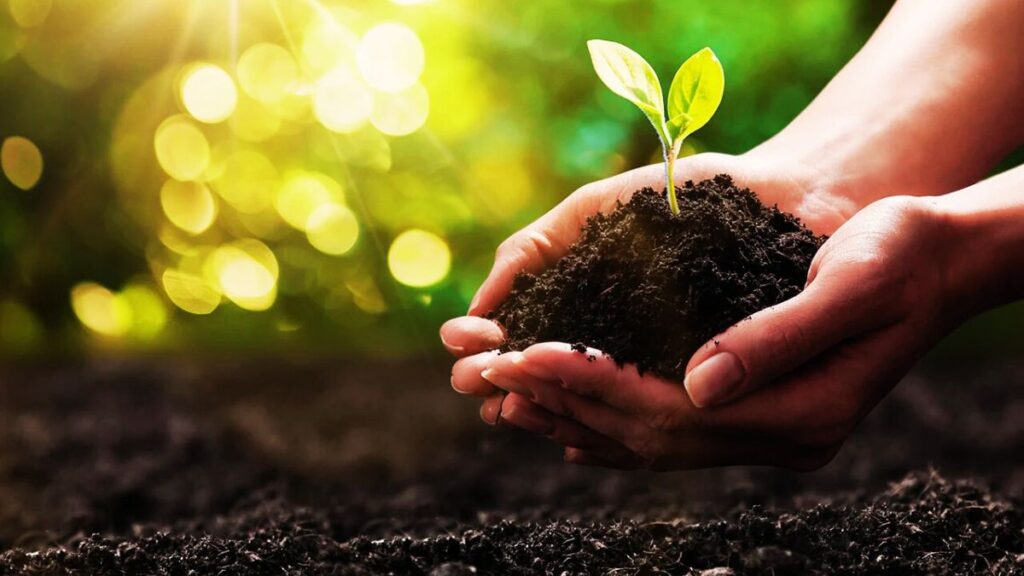
In such a scenario, there is an urgent need for scientific treatment of our soils to restore their fertility.
Indian soils are generally deficient in nitrogen, mineral salts, humus, and other organic materials.
Depending upon the topography, the structure of soils may vary. Plains and valleys have a thick layer of soil, whereas hills or plateau regions have a thinner layer of soil.
A few types of soil are very fertile, such as alluvial or black soil, but other types of soil, such as laterite or alkaline soil, are less fertile.
Here, we will discuss the types of soil that are predominantly prevalent in India and also important for the examinations.
Soil Distribution in India:
Alluvial Soil:
Alluvial soils cover more than 40% of the total soil area of the country and are formed through the process of deposition of sediments (sand, silt, clay, etc) in layers.
Alluvial soils are classified into Khadar (newer alluvium) and Bhangar (the older alluvium). Bhangar lands are generally above flood level and far from the stream.
Bhangars are further divided into two different classes: Bhurs (wind deposits) and Usar soils. Alluvial soils are extensively found in the Northern plains, the River valley plains, and the coastal plains.
Such soil is suitable for the cultivation of sugarcane, jute, rice, wheat, oilseeds, pulses, maize, millets, and fodders.
Red Soil:
Red soils develop over the old crystalline and metamorphic rocks. The colour of this soil is red due to the higher deposition of iron. Red soil covers 18% of the total soil of the country.
Red soils are usually common in the hot and humid regions such as Tamil Nadu, Karnataka, Andhra Pradesh, Chhattisgarh, Jharkhand, Madhya Pradesh, and Odisha.
As Red soil is poor in lime, nitrogen, and phosphorus content, and rich in potash, it is suitable for the cultivation of rice, maize, millets, pulses, small grains, etc.
Regur or Black Soil:
Black soil, also known as cotton soil, covers almost 15% of the total soil area of the country. These soils are generated from the weathering of igneous rocks and stretch over Maharashtra, Andhra Pradesh, Gujarat,and Madhya Pradesh.
The advantages of black or regur soil are that they are mature soils with high water retaining capacity. They are extremely compact and tenacious when wet and develop wide cracks when dry.
When the soil is wet, it is difficult to plough the field as the plough gets stuck in the mud. Apart from cotton, these soils are suitable for the cultivation of maize, millets, pulses, and citrus fruits such as oranges, lemons, etc.
Desert Soil:
These soils have sandy textures and are rich in mineral salts but poor in organic matter. Desert soils have high pH and are found in areas where annual rainfall is below 40cm, such as Rajasthan, Gujarat, Haryana, and Punjab.
Desert soil with reddish brown colour and sandy texture is known as ‘Bhur’. Generally, desert soils are not good for agriculture, but with proper preparation and irrigation, Bajra, Pulses, Jowar, etc, can be grown.
Mountain Soil:
Mountain soils are found in the sub-mountain tracts of the Himalayas and parts of the Andaman and Nicobar islands.
The terai soils of the Himalayan foothills are rich in nitrogen and organic matter, known as humus. In mountain states, these soils are popularly known as brown podzol soils.
These soils are suitable for the plantation of tea, coffee, spices, and tropical fruits.
Laterite Soils:
The name of Laterite soils has been derived from the Latin word later, which means brick. These soils are commonly found in the humid tropical or equatorial zones, characterised by the deep weathered layer of silica that has been leached.
These soils are red due to a high concentration of iron and aluminium. But laterite soils are poor in organic matter, phosphorus, potassium, lime, and nitrogen.
Karewas Soil:
Karewas are the lacustrine deposits in the valley of Kashmir. They are composed of fineslit, clay, sand, and boulder gravel, which are deposited by lakes.
Karewas’ soils are very fertile for cultivation and suitable for saffron, almonds, walnuts, apricots, apples, peach, etc.
Also Read: Important Wildlife Conservation Projects In India For UPSC, SSC, Railways, & Other Examinations
Also Read: Distribution of Minerals in India for SSC, Railways, & Other Examinations

Hi, I am Lakshya Sen.. I have been teaching for SSC, Railways, and Other Examinations For 5+ years. To date, more than 1000 students have fulfilled their dreams with the help of my guidance.