
The changing nature of social and economic lives in the 6th century BCE was closely linked with the changes in religious and philosophical ideas.
With the emergence of the Mahajanapadas, the conflict between orthodox religious ideas and newly formed groups intensified.
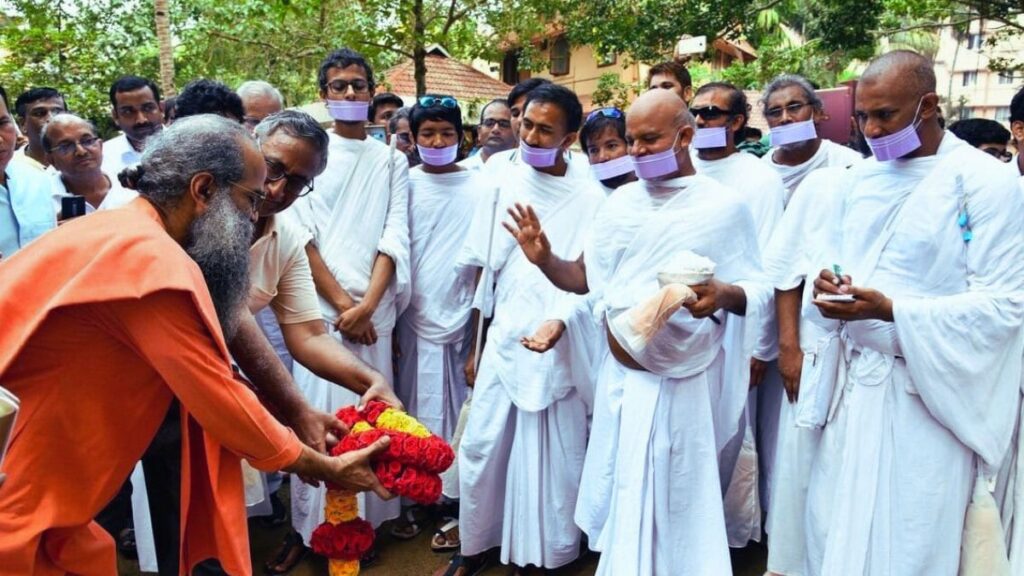
Numerous religious sects evolved around the Gangetic plain in the 6th century BCE and challenged the dominance of Hinduism.
Jainism: The Introduction
The origin of Jainism is nothing less than an unsolved mystery. It is believed that 24 Tirthankars contributed to the development of the religion.
Jainism doesn’t focus on birth to determine social status. Hence, Jainism attracted the Vaishyas easily to its fold.
Rishav Dev was the first Tirthankara. According to the Bhagwat Purana and Vishnu Purana, he was the incarnation of Narayana.
Mahavir:
Mahavira Vardhamana, also known as Mahavira, Nayaputa, or Nirgrantha, was born in 540 BCE at Kundagram in Vaishali. His father was Siddhartha, and his mother was Trishala.
Mahavir was married, and Yashoda was his wife. He was from the Kshatriya dynasty.
Mahavir attained enlightenment at Jimbikagrama, on the bank of the Rijupalika River. In his journey, Gosala Makkhaliputta was his main companion. Mahavir died on 468 BCE at Pavapuri near Rajgriha.
Philosophy of Jainism:
Jainism completely rejected the authority of the Vedas and the rituals mentioned there. According to them, the world is not created, maintained, or destroyed by a single god. It regulates through a universal law.
Jainism also didn’t believe in the existence of Gods. However, it believed in Karma and the transmigration of the soul. It advocated the path of non-violence.
The other philosophies of Jainism are as follows:
| Anekantavada | Objects of knowledge are of infinite characteristics. |
| Nayavada | Understanding an object from a particular point of view. |
| Saptabhanginaya | Seven points of view to understand any object. |
| Syadvada | Understanding of an object of knowledge is conditional. |
Doctrines of Jainism:
| Ahimsa | Non-Violence |
| Satya | Truthfullness |
| Asteya | Non-stealing |
| Bramhacharya | Celibacy |
| Aparigraha | Non-possession of property. |
Five Vows or Principles:
The householders must follow the following five vows or principles in their daily lives:
- Non-injury
- Non-stealing
- Speaking the truth
- Non-possession
- Non-adultery.
The first four principles were given by Parshvanath (23rd Tirthankara), and Lord Mahavira added the 5th one.
Three Jewels to Attain Kaivalya:
| Samyak Gyan | Right Knowledge | Understanding of religious principles |
| Samyak Vishwas | Right Faith | Belief in Jainas |
| Samyak Karma | Right Action | Following the 5 vows. |
Sects of Jainism:
After the death of Mahavira Vardhamana, especially during the reign of Chandragupta Maurya, a severe famine led to an exodus of Jain monks from the Gangetic Valley to the Deccan and Kashmir.
Jain monks were divided into two parts, namely Digambara and Svetambara, and moved towards Deccan and Kashmir, respectively.
Digambaras were the followers of Bhadrabahu, whom Chandragupta Maurya accompanied to the south. They insisted on the retention of the rule of nudity.
Svetambaras were the followers of Sthulabhadra and moved towards the north to preach the ideas of Jainism. Unlike Digambaras, Svetambaras used to wear white garments to cover their bodies.
Jain Councils:
| Councils | Periods | Places | Heads | Consequences |
| 1st Council | 300 BCE | Patliputra | Sthulabahu | Compilation of 12 Angas to replace the last 14 Purvas. |
| 2nd Council | 512 AD | Vallabhi | Devardhi Kshamasramana | Final compilation of 12 Angas and 12 Upangas |
Royal Patrons & Jain Architectures:
Royal Patrons & Jain Architectures:
South Indian dynasties like the Kadamba and Ganga dynasties, Amoghvarsa from the Rashtrakut dynasty, Siddharaj Jai Singh, and Kumar Pala from the Chalukya dynasty were great followers and patrons of Jainism.
North Indian kings such as Bimbisara, Ajatashatru, Udayain from the Haryanka dynasty, Chandragupta Maurya, Bindusara, Samprati from the Mauryan empire, Pradyota from Avanti, and Kharvela from Kalinga were great admirers of Jainism.
Chandragupta Maurya was the only king who died by practising Sallekhana or slow starvation.
Architectures:
The earliest Jaina figure was the image of a Tirthankara from Lohaonipur (Patna), dating back to the Mauryan period.
Dilwara temples at Mount Abu in Rajasthan, Vimala Vasahi, and Tejpala temples are some of the famous Jain temples.
The statue of Gomateshwara or Bahubali at Shravanabelagola in Karnataka was one of the most impressive Jain sculptures.
Jains composed the earliest important works in Apabhramsa and its first grammar. They also contributed significantly to the growth of regional languages like Hindi, Tamil, Telugu, and Rajasthani.
Test Your Knowledge:
Also Read: Important Bio-Diversity Hotspots In India For SSC, Railways, and Other Examinations

Hi, I am Lakshya Sen.. I have been teaching for SSC, Railways, and Other Examinations For 5+ years. To date, more than 1000 students have fulfilled their dreams with the help of my guidance.